
There is a particular feeling that arrives with the start of a new football season. Alarm clocks reset to earlier, group chats stir back to life, and the smell of freshly cut grass suddenly feels loaded with possibility again. With the Premier League back and football returning across every level, from the top flight to Sunday-morning five-a-side, the season's return is a genuine moment. It shapes what people wear, what they buy, and how they show up. This guide covers both sides of that: the style story off the pitch, and the practical kit questions for those getting back to playing.
Football Style Off the Pitch: The Retro Shirt as a Fashion Piece
Football's influence on everyday fashion is nothing new, but the retro shirt has moved firmly into considered style territory. Vintage and classic football shirts, worn casually rather than as matchday kit, have become a genuinely versatile wardrobe piece for men and women alike. The appeal is partly cultural and partly aesthetic: older shirt designs tend to favour bolder graphics, unexpected colour combinations, and a looser silhouette that works well with contemporary casual dressing.
The key to wearing a retro football shirt in a way that reads as style rather than costume is in what you pair it with. Keep the rest of the outfit simple and well-fitted, and the shirt does the work.
How to Style a Retro Football Shirt
With straight-leg or wide-leg denim: A classic pairing. Dark or mid-wash jeans balance the casual nature of the shirt without looking overdressed. Cuff the hem slightly for a more considered finish.
With relaxed tailored trousers: A slightly unexpected combination that works particularly well for women. A bold vintage shirt tucked loosely into wide-leg trousers in a neutral tone creates contrast without looking like it is trying too hard.
With clean, minimal trainers: Avoid overly technical or chunky running shoes. A simple leather or canvas trainer in white or one tone keeps the eye on the shirt.
Football shirts sit comfortably within the sport-influenced fashion trend that has dominated casual dressing for several seasons. Terrace style, tracksuits worn as separates, and the crossover between sportswear and everyday fashion all speak to the same cultural moment. A well-chosen retro shirt is part of that conversation, not separate from it.

Getting Ready to Play: Practical Kit Advice for the New Season
For those heading back to five-a-side, grassroots club football, or a local league for the first time in a while, the beginning of a new season is a natural moment to take stock of your kit. The most important starting point is almost always boots.
Choosing Football Boots for Your Playing Surface
Football boots are designed around the surface you play on, and wearing the wrong type can affect comfort significantly. The key categories are straightforward.
Firm Ground (FG): The standard stud configuration for natural grass pitches that are well-maintained and dry or slightly soft. FG boots have moulded, conical or bladed studs fixed to the outsole. They are the most common type for outdoor grassroots and amateur club football.
Soft Ground (SG): Designed for wet or heavy natural pitches. SG boots typically have fewer, longer metal or screw-in studs to penetrate deeper into softer turf. They are less common for casual or five-a-side use but worth knowing about if you play on pitches that regularly get waterlogged in winter.
Artificial Grass (AG): Specifically designed for 3G and 4G artificial pitches, which are now standard at many leisure centres and five-a-side venues. AG boots have a higher number of shorter, more evenly distributed rubber studs to handle the harder, more consistent surface without causing discomfort. It's also worth knowing that many artificial pitches do not permit metal studs, and some venues specify AG or moulded boots only, so it is always worth checking your venue's footwear rules before you play.
Indoor or Turf (IC/TF): Flat rubber soles or very small rubber nubs, designed for indoor courts, sports halls, or very short artificial surfaces. Using standard studded boots indoors is uncomfortable and can be impractical on hard court surfaces.
Getting Boot Fit Right
Fit matters more than the model or the marketing. A few simple principles apply regardless of budget or brand.
Try boots on in the afternoon or evening when your feet are at their largest, ideally with the socks you plan to play in.
You should have roughly a thumb's width of space between your longest toe and the end of the boot.
The midfoot should feel snug without pinching, and the heel should sit without slipping.
If you play primarily on artificial grass, be aware that AG-specific boots generally offer a noticeably better feel underfoot than FG boots used on the same surface.
Choosing the Right Football
A good ball is easy to overlook and makes a surprising difference, especially if you organise your own sessions. A few things worth knowing:
Size: Size 5 is standard for adults and players from around age 14; size 4 suits younger players roughly 8 to 13; size 3 is for the youngest. Match the size to who's playing.
Match vs training balls: Match balls are built for performance and truer flight; training balls are more durable for repeated everyday use and tend to be the sensible choice for regular practice.
Surface: Some balls are designed with harder-wearing outers for artificial and hard surfaces, which last longer than a standard ball used on 3G week after week.
Accessories Worth Sorting Before Your First Game
Beyond boots and a ball, a few basics are worth checking before you restart.
Shin pads: required for most organised games and worth replacing if yours are cracked or have lost their shape.
Football socks: these need to cover shin pads, so make sure the length works before matchday.
A kit bag or boot bag: keeps muddy boots and wet kit separate from everything else, and makes getting out the door easier.
A pump and spare valves: an under-inflated ball is a false economy, and a small hand pump is worth having in the bag.
Boots, footballs and accessories are widely available at reduced prices throughout the year, which makes the start of a season a sensible time to review what you have and fill any gaps without overspending.
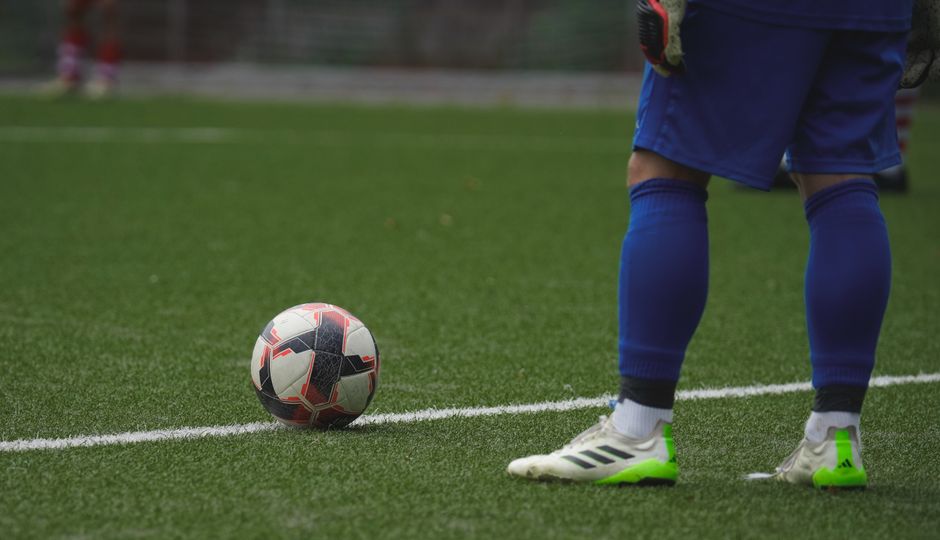
The Ritual of It
What makes the start of a football season feel significant is not just the matches. It is the habits and routines that come with it: the specific way a Saturday or Sunday morning organises itself, the group of people you play with or watch with, the kit you reach for, the shirt you wear to the pub. Football, at every level, comes with a culture attached to it. Dressing well within that culture, whether on the pitch or off it, is simply part of taking it seriously in the best possible way.

FAQs
Is the football season back?
Yes. The Premier League and domestic football across the UK return for the new season this month, alongside the grassroots, amateur and five-a-side football that starts up again around the same time. It is the busiest point of the year for anyone reviewing their kit or getting back into playing.
What is the difference between FG and AG football boots?
FG (Firm Ground) boots are designed for natural grass pitches and have moulded conical or bladed studs. AG (Artificial Grass) boots are designed for 3G and 4G artificial turf surfaces and have a larger number of shorter, more distributed rubber studs. Using FG boots on artificial grass can be uncomfortable over time, as the stud pattern does not match the surface correctly.
Are metal studs allowed on artificial pitches?
Many 3G and 4G artificial pitches do not permit metal studs, and some venues restrict play to AG or moulded boots only. Rules vary from venue to venue, so the most reliable approach is to check the specific footwear policy of the pitch you are playing on before you go.
What size football do I need?
Size 5 is the standard match ball for adults and players from around age 14, size 4 suits players roughly 8 to 13, and size 3 is designed for the youngest players. If you are buying for regular practice rather than matches, a durable training ball is usually the more sensible choice.
How do you style a retro football shirt casually?
A retro or vintage football shirt works best as a casual fashion piece when paired with simple, well-fitted items elsewhere in the outfit. Straight-leg or wide-leg denim, relaxed trousers in neutral tones, and clean, minimal trainers are all reliable pairings. For women, tying the shirt loosely at the waist can add shape and intention. Avoid pairing it with other bold graphics or heavily branded pieces, as the shirt itself is the focal point.